CORPS de Ballet and the Tudor Curriculum
Awards, Conference, Workshops
22, 23, 24, 25 June 2011
Grande Street Cafe, UMKC Dance Division PAC 103, 128 and KC Ballet Studioshttp://www.corps-de-ballet.org
1 - The Awards Banquet
Grande Street Cafe, at 47th and Grand, behind Winsteads, had some of dance and dance education's heavy hitters for dinner, Wednesday night the 22cnd. This was the 13th annual CORPS conference and featured a major emphasis on introducing the Antony Tudor curriculum for schools. CORPS de Ballet is an acronym/word name - Council of Organized Researchers for the Pedagogical Study of Ballet. That's a handle. I'll just spell it "CORPS," in caps.
UMKC's own Paula Weber, chair of the dance division within the Conservatory is president of CORPS. KC Ballet
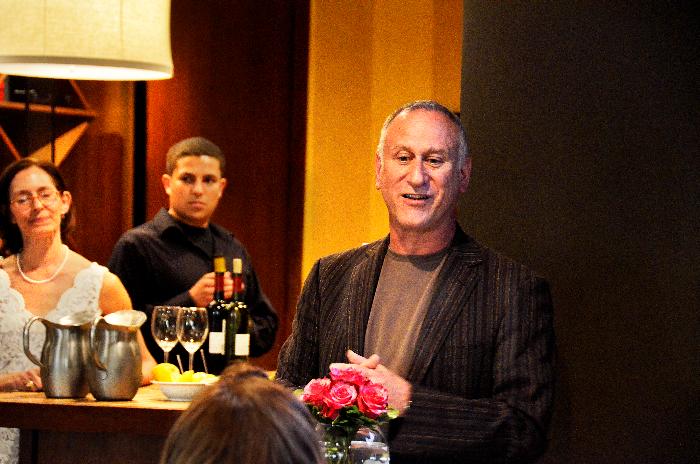
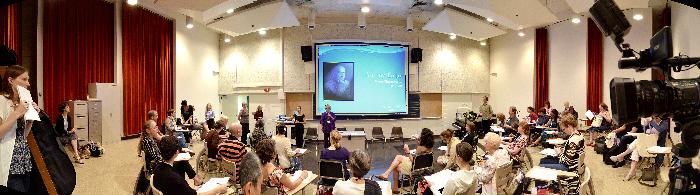
KC Ballet's Artistic Director William Whitener gave the opening address. CORPS president and UMKC dance division chair, Paula Weber is on the left.

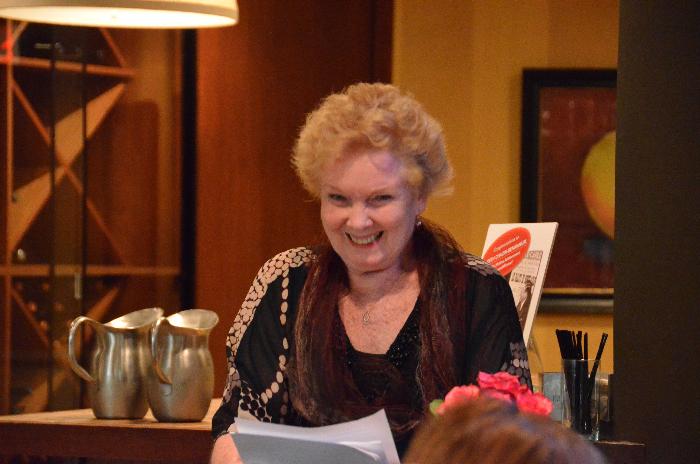
Dance author Judith Chazin-Bennahum opens her lifetime acheivement award, presented by Paula Weber.
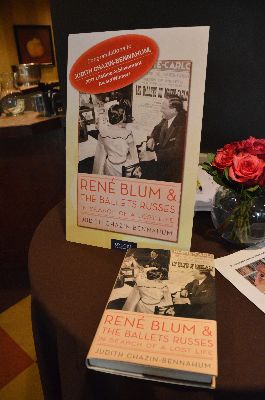
A display of Judith Chazin-Bennahum's latest book.
.
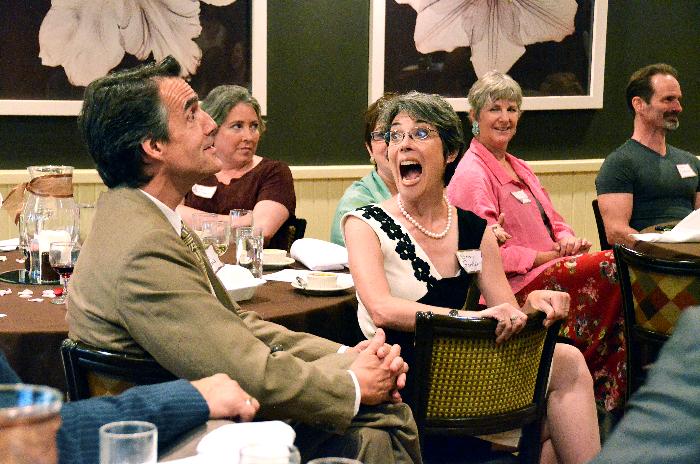
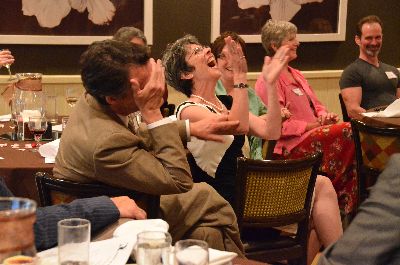
Left, David Curwen, listens to speeches in honor of his Service Award as wife, Sharon Garber, reacts.
In these pictures, the awards banquet is hearing a comicly garbled email message David sent several years ago, while on painkillers for a bad back sprain.
He had been heading toward an earlier conference when he was injured.Determined not to let down the conference, and barely able to walk un-aided (after first having to be lifted) he was prescribed pain and anti-inflammatory medications, which influenced his perceptions for several days and brought hilarity to this conference. Maybe he should also get the "good sport" award?
The couple teach in the dance department at Western Michigan University where Sharon Garber and David Curwen are both Associate Professors. (http://www.wmich.edu/dance)
Sally Brayley Bliss, from the Antony Tudor Ballet Trust and executrix of the Tudor Estate, addresses the group. She recounted her ealy history dancing for Tudor and Balanchine.
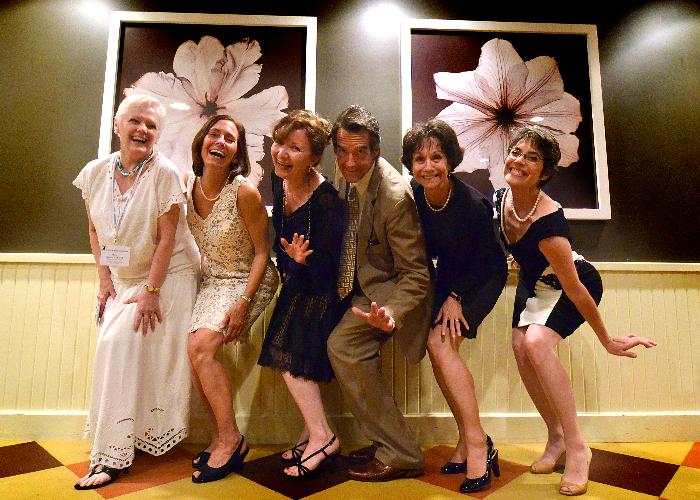
Current and past presidents of CORPS: Paula Weber, ..., David Curwen, Christine Knoblauch-O'Neal, Sharon Garber
2 - The Workshops and Summer Intensive
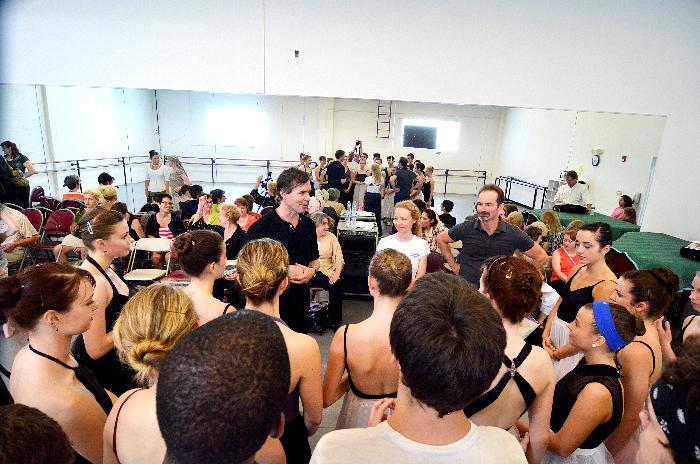
Introducing the Tudor Curriculum to ballet educators in the CORPS conference (Here at UMKC, room 128 in PAC - Performing Arts Center) the morning of the first day, 23 June 2011.
The resignation seciton from "Dark Elegies" by Antony Tudor during performance/lecture demo on Saturday afternoon the 25th of June 2011 combining dancers from Webster University in St. Louis and from UMKC dance division.
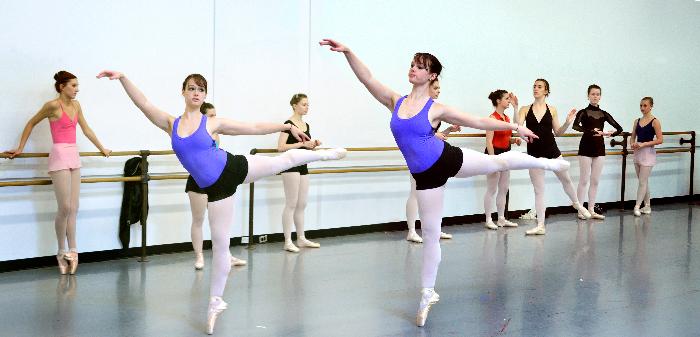
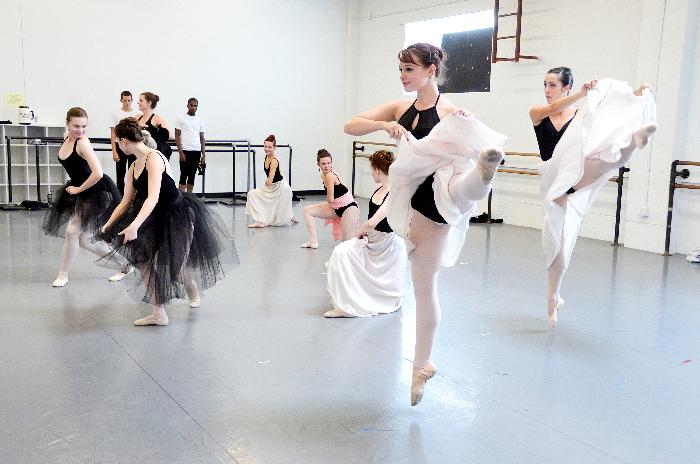
Tudor class in KC Ballet School's summer intensive. Here I've stitch two shots of the same ballerina (from Webster) in Arabesque. She is not twins.
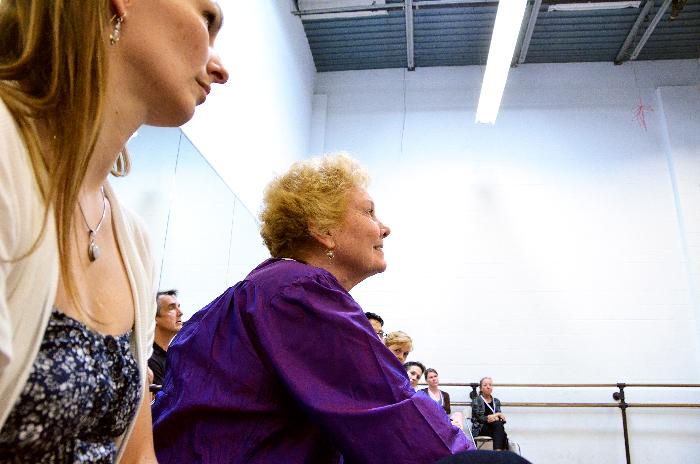
Left to right: KC Ballet dancer Kimberly Cowen, Tudor Trust's Sally Brayley Bliss,
watch a Tudor Curriculum class demo in the KC Ballet Studios (Studio 3)
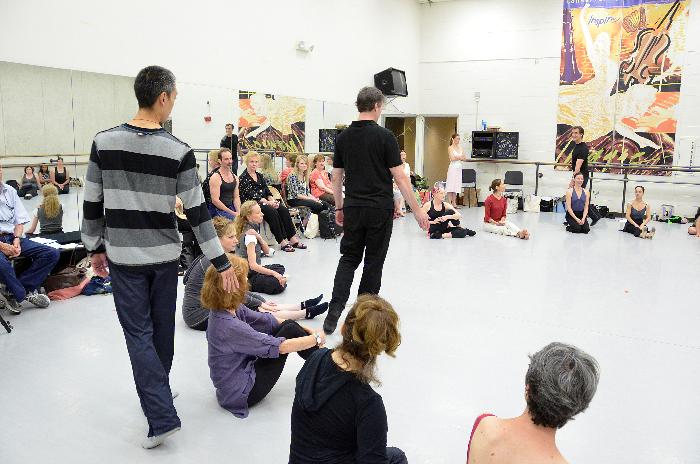
Workshop with ballet teachers in a section from "Dark Elegies" repetiteur and KCB Ballet Masterr James Jorden (center, in black) leads the exercise.
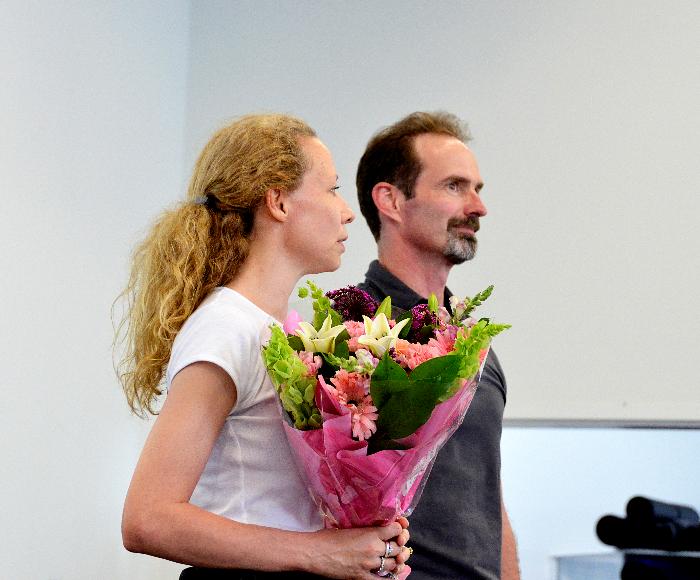
Amanda McKerrow and John Gardner accept flowers for their teaching and guidance in the summer intensive with KCB
James Jordan, Amanda McKerrow and John Gardner surrounded by students from the summer intensive with KCB
The Can Can number in Antony Tudor's Offenbach and the Underworld.
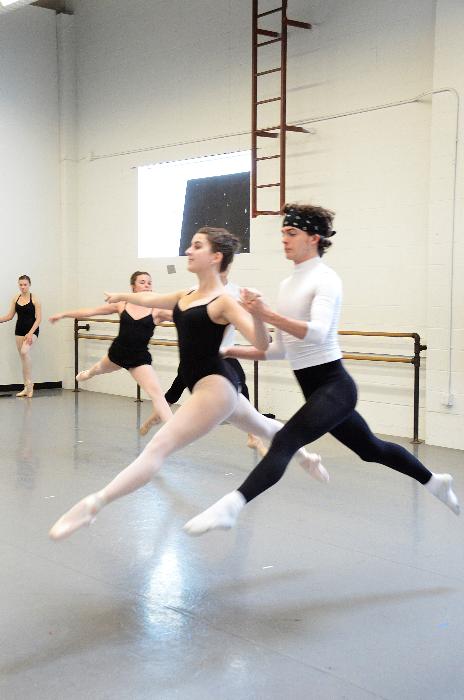
Part of the class / demo at KC Ballet in Studio 3. The dancers are in the KC Ballet School Summer Intensive.
Workshop run throughs for Tudor's Continuo (at KC Ballet Studios)
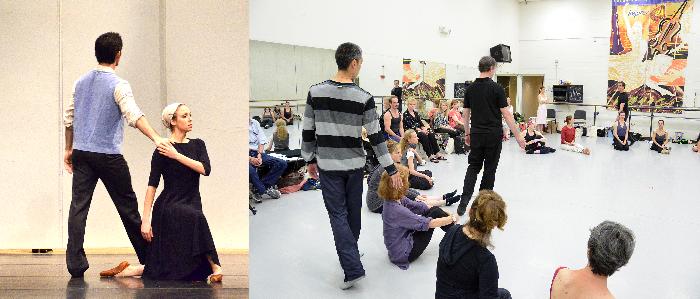
The same moments from resignation section of Dark Elegies by Antony Tudor where a husband and wife in the grieving village touch. At lLeft in a demonstration performance where UMKC student and grads reprised their roles from the UMKC Spring concert (here, Gavin Stewart, Rose Taylor-Spann) along with Webster University students. At right in a workshop with ballet teachers repetiteur and KCB Ballet Master James Jorden (center, in black) leads the exercise.
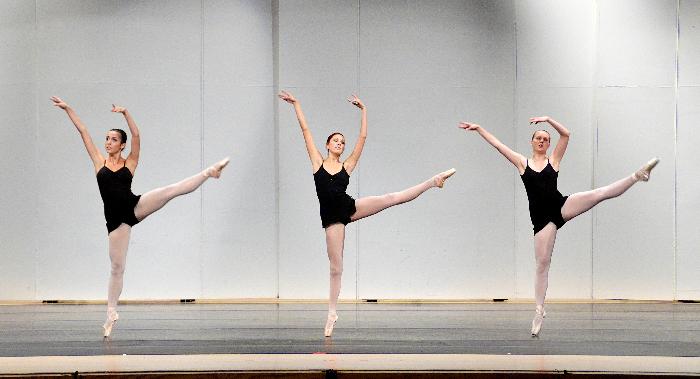
One of three groups in a short sequence from Continuo by Tudor - Here in White Recital Hall, UMKC, Saturday lecture/demo
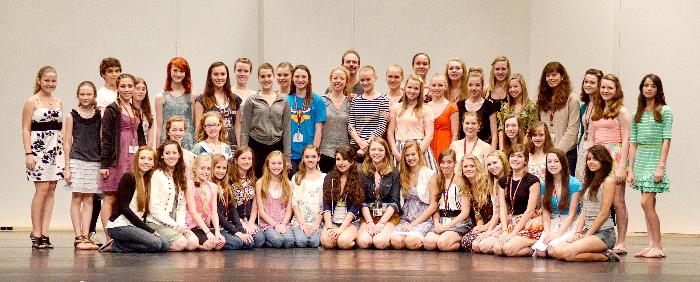
A number of the Kansas City Ballet School's Summer Intensive (2011) students line up on stage in White Recital Hall for a photograph. Husband and wife dancers, Amanda McKerrow and John Gardner are in the center back.
Shooting Dance
An example
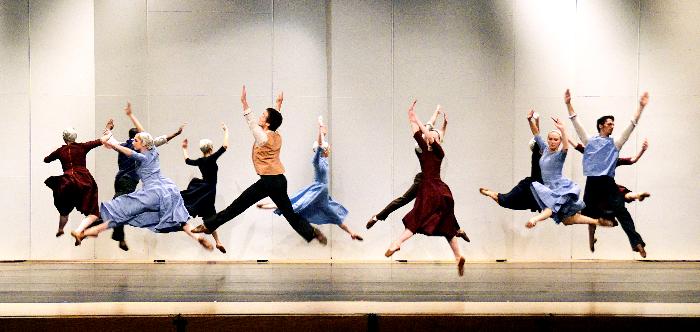
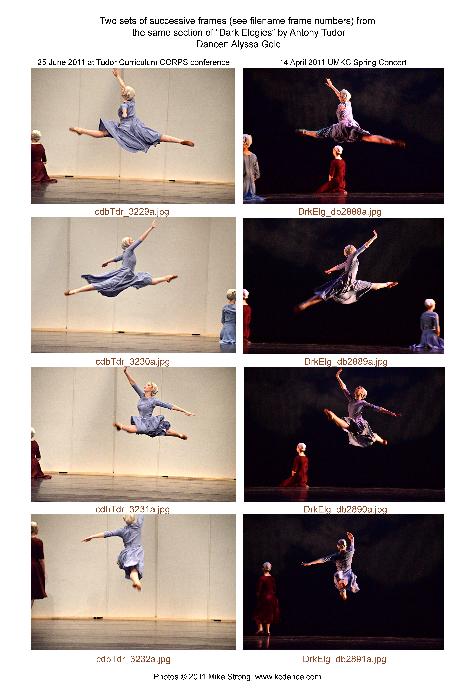
Photographing this piece again gave me an opportunity to repeat a sequence of shots. The dancer is Alyssa Gold (UMKC). She had done these jetés for performance two months earlier in the Spring 2011 concert.
Here she was again, reprising the role and hitting the same spots.
In spring I took exactly four shots for the seqence shown here on the right (frame numbers, 2888, 89, 90 and 91).
On the left, I shot the same places, again with four clicks of the camera and Alyssa Gold was exactly the same again (frame numbers, 3229, 30, 31, 32).
This seemed like a good opportunity to create an example of shooting at the right moment, rather than what I usually see from media shooters, which is to "machine gun" the camera in hopes of getting something.
Continuous drive (motor drive) is the worst way to shoot. At several frames per second you would not get either one of these two sequences, let alone both.
I have yet to see a camera which can listen to music, watch the dancer and learn from rehearsals. I've been asked for tips and I have to say there really are no tips. Dance photography is neither concert photography nor motion/action photography, despite surface similarities. Underneath you need what is called "subject knowledge" and there is no simple formulation for subject knowledge. No checklist will get you there.
I always say that listening is more important than looking. That the dance and dancer are more important than any "graphic" or "photographic" sense. Any graphics should derive and emerge from the dance itself. The same with "tips" for the camera, the come directly from an understanding of the subject matter, not as an imposition of "rules" and techniques of photography.
Email This Page
Dance Division moments between studio classes
Fall Concert "Choreofest" |
|
| The annual fall concert with staff and guest choreography.
|
November 2011 November 2010 November 2009 November 2008 November 2007 November 2006 November 2005 |
Spring Concert |
|
| Held every April with staff and visiting choreography. This could be considered the school's Dance Division Showcase for the year. |
April 2011 April 2010 April 2008 April 2007 |
Other Dance Concerts and Dance Division Events at UMKC |
|
These range from guest concerts, to special classes with visiting masters to various other dance events with UMKC dance division dancers. |
Carmina Burana |
Senior Recitals |
|
These are held in the winter semester and the graduating seniors begin signups and rehearsals early in the fall semester. This is one of their last graded works. Each senior choreographs and directs a group piece and performs in a solo which may be self-choreography or another's and may also be a duet if there is a large enough mix of solo to duet. There are a number of recital concerts, depending on the total number of seniors. Generally the mid-week concerts have in-town seniors while those with families out of town are scheduled for Saturdays so their relatives can attend. |
Senior Recital 2012 |
Related Links |
|
Non-UMKC events which have UMKC dancers, staff or visiting artists. |
Don McKayle talk at Public Library, KCMO about Kansas City Ballet piece he was commisioned to create. UMKC guys in Romeo and Juliet at Kansas City Ballet Spring 2008 backstage in costumes. Wylliams/Henry Sept 2006 and "Games ," choreography Donald McKayle. |
For some of the least expensive, good dance entertainment in Kansas City the University of Missouri Kansas City's Conservatory of Dance and Music's Dance Division offers some of the best young adult dancers in the area. UMKC's Dance Division is among the top dance schools in the country. Those of us who live in this area often miss that distinction but people elsewhere know (isn't it always so?). Each year's entering classes just keep getting better as the incoming talent keeps inching upward in ability. Some of the students are fed into the system by local studios and some are from national and even international recruiting by the dance staff. Although this web site is a journalistic effort to show dance in Kansas City, and is not intended as a booster of anyone in particular, the pages listed above are referenced by students considering attending the Dance Division. The students in the program are intense. They are not just talented, they are hard working, very focused and very competitive in a way that shows competition is cooperative. I've watched them truly support each other. As an adjunct, I have a computer class with a lot of these highly disciplined young people. They are very sharp. (As are athletes in the athletic program, and for many of the same reasons as the dancers. I get those "kids" in my classes too and they really focus hard because they are gone a lot as well.) This focusing skill among dancers has seemed far more obvious in the last couple of years since Twitter and other web media have produced an adapted audience with short attention spans whose questions show that they skip and skim material rather than read throughly. Although I've no way of testing it, I don't think there are any more Einsteins or Not-Einsteins among dancers than among anyone else. However, I am more convinced than ever that the practice of dance develops the ability to focus intently as a result of two things, 1) the need to quickly and efficiently make up for time away from classes in rehearsals and performances (something shared with our athletic-program students) and 2) the need to remember precisely so many details and variations in choreography and be able to modify program details in a snap. That is a terribly valuable tool for all walks of life. The dancers have to be sharp, partly because so much of their non-class time is spent in rehearsals, performances and their own works (i.e. senior recitals) not only for shows at UMKC, but also locally in Kansas City where they form a part of the talent pool. Many of those rehearsal schedules are on weekends and late into the nights. Sometimes they can be in 40 or more hours of rehearsal a week - that is time outside of class, job, transportation and so forth. It varies greatly but it is seldom light. I would also call dancers athletes but I hate to, not because they are not athletes but because such statements tend to sound more like an excuse for dance to be tolerated as legit. I think the comparison of dancers and athletes should be more like a multiple of the famous Ginger and Fred comparison which states that she does all the stuff Fred does, but in high heels and backward too. Dancers don't just move a ball to a goal (so to speak) but they have to do it in character, smiling, with grace and technique specific to the art form, never letting down and never stopping, on beat, keeping count, and repeating exactly the same moves to the same music again and again (you should see some of my comparison videos of separate runs), no mistakes. No cut on traditionally-defined athletes (football, baseball, etc.) and not that there is not tremendous grace in the result, but they get to grunt, groan and grimace with bodies twisted and turned any which way just as long as the ball gets to the goal. In my personal experience with these "kids," these dancers are talented as both physical athletes and mental athletes. Then there is the thing about what great people they are, but that is another rant. Don't get me started. |
| http://conservatory.umkc.edu/division-dance.cfm |
| Please Enter Your Comments Below, Thank you. | |
| CORPS de Ballet and Tudor Curriculum June 2011 Items with an Asterisk (*) are required |